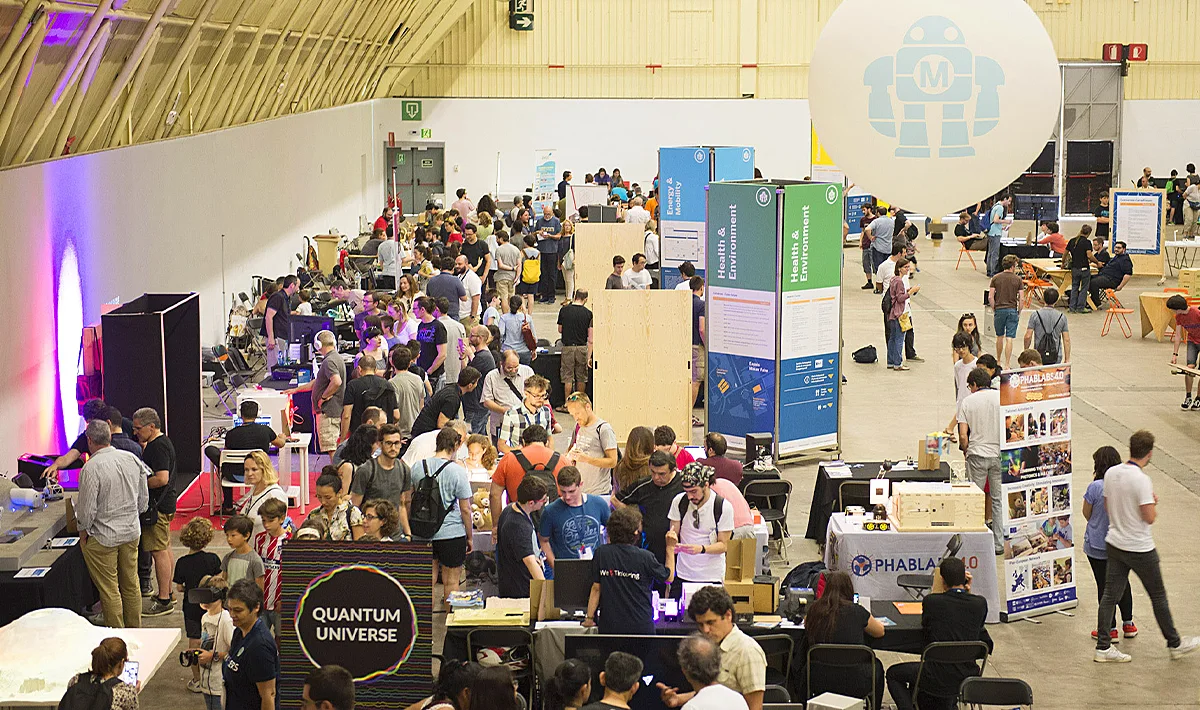
The challenge
Designing a dynamic experience for an evolving space
Each edition of Maker Faire Barcelona introduced a new spatial configuration and set of functional requirements. The first two editions were similar, but the second one was a completely new layout. The ongoing challenge was to preserve a recognizable identity alongside different visual designs that were implemented in each edition, and to adapt the design to new layouts, exhibitor arrangements, and visitor flows.
-
Visitor Flow: Making circulation intuitive within a large, activity-filled venue.
-
Visual Consistency: Creating a unified look across diverse exhibitor styles and materials.
-
Scalability & Modularity: Ensuring the design could expand or contract depending on the edition’s size and location.
-
Budget & Sustainability: Developing reusable, cost-effective structures for temporary setups.
-
Identity Continuity: Translating the Maker Faire brand language spatially across multiple years while keeping it fresh and relevant.
Definition
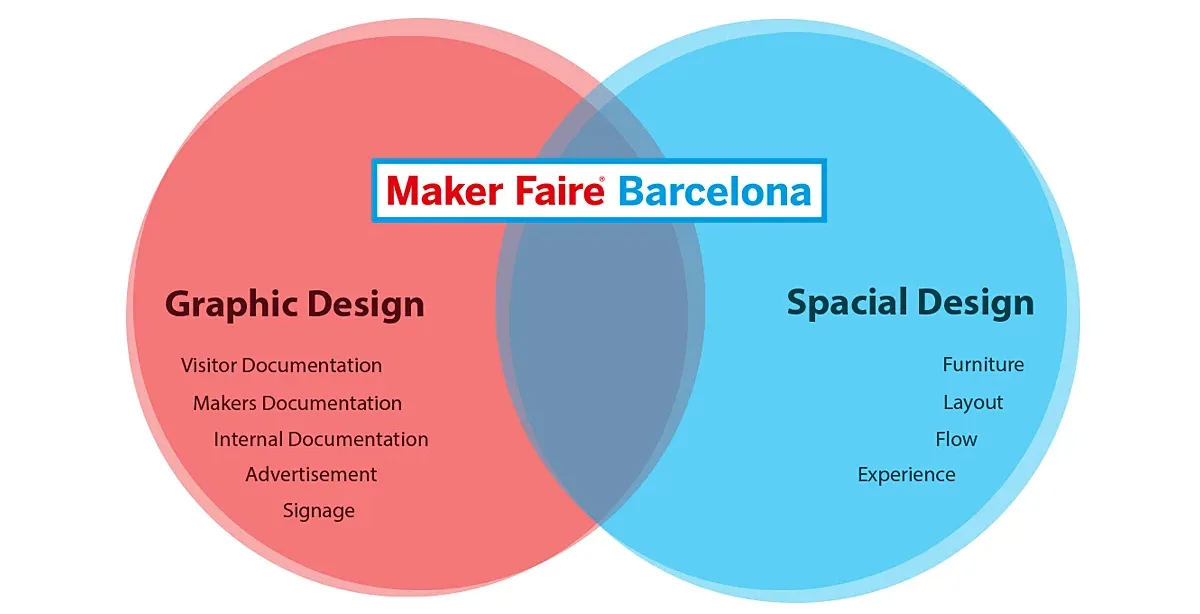
Scope and Methodology
The project was defined around two complementary design areas — graphic design, focused on the visual identity of the fair, and spatial design, which involved layout planning, zoning, and wayfinding structures — both developed in parallel to create a cohesive and recognizable visitor experience.
The project followed a four-month design and production roadmap, structured into five phases:
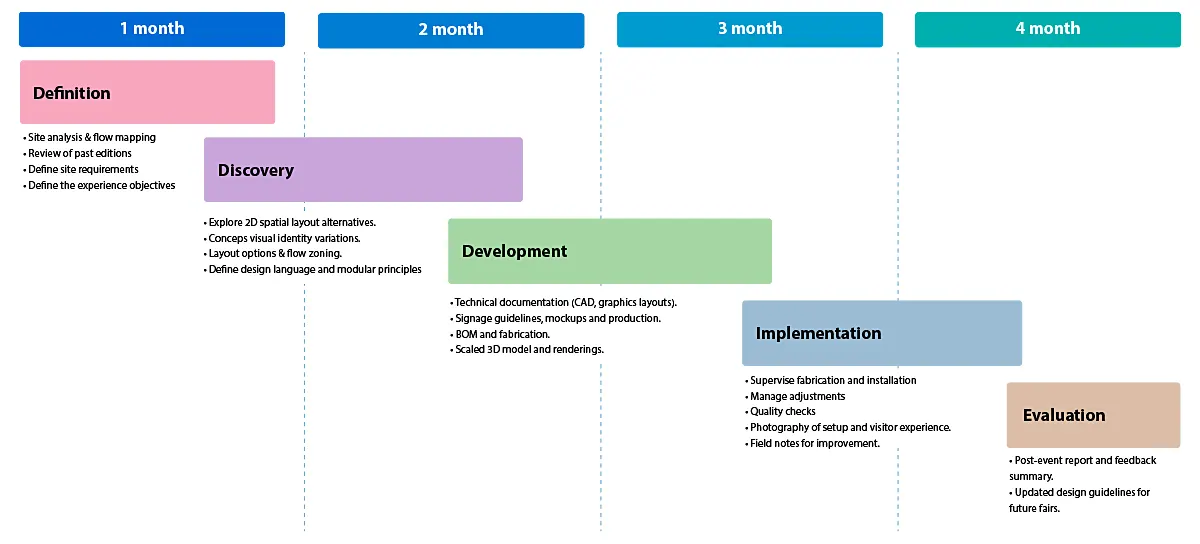
Discovery
Understanding the local context and exploring the Maker Faire Universe
As a first step in all editions, we visited and documented the venue to understand its spatial characteristics, visitor access, technical constraints, and environmental potential. Then we used these observations as the foundation for both the spatial layout and the graphic system of each edition.
-
Site documentation (measurements, circulation analysis, and environmental mapping).
-
Identification of visitor access points, exhibitor needs, and safety parameters.
-
Evaluation of lighting and acoustics.
-
Definition of design opportunities and constraints that would guide the next phase
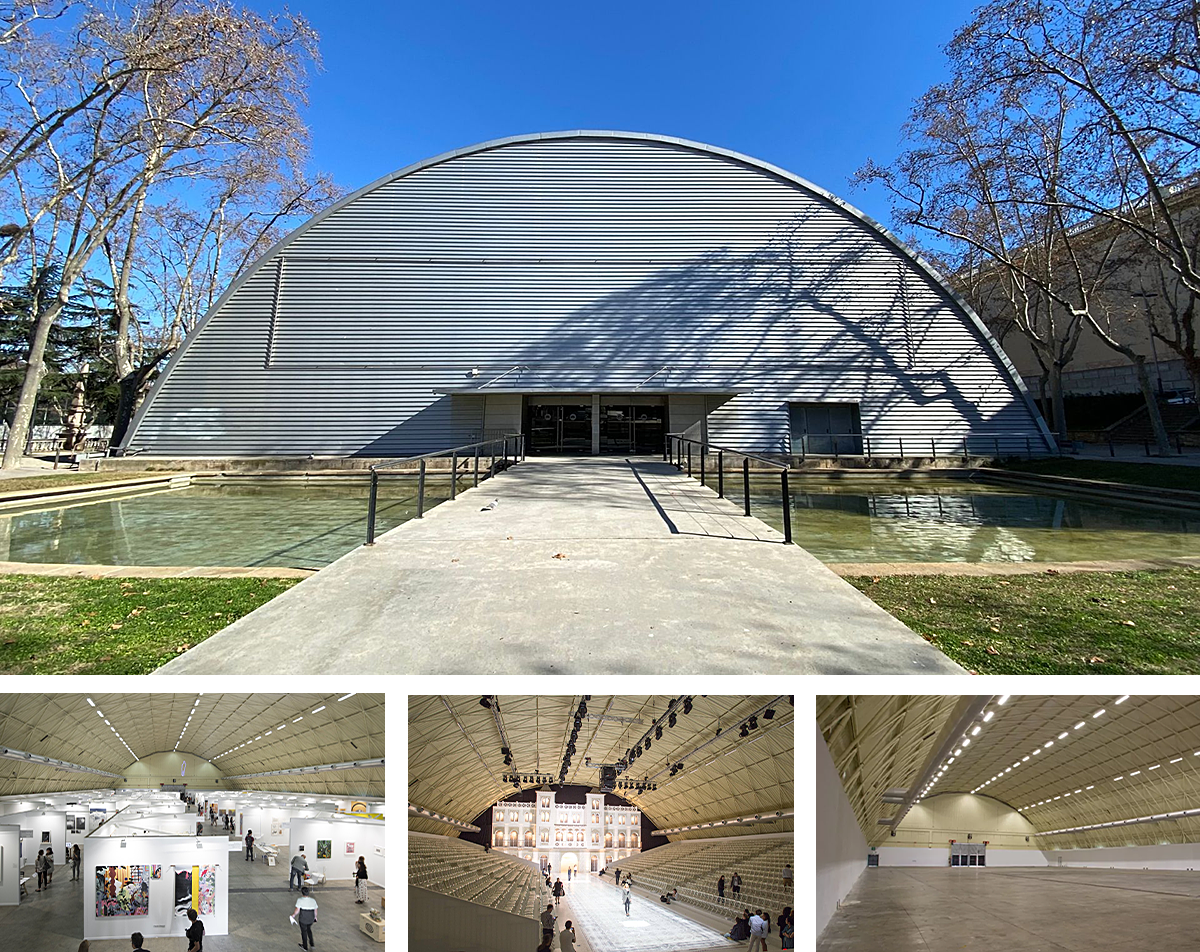
Italian Pavilion – Fira Barcelona (2017-2018 editions)
A structure located within the Montjuïc fairgrounds, which offers a large, open-plan interior, high ceilings, industrial finishes, but almost no natural light. It is a symmetrical space that helps to create a clear and organized exhibition layout.
Nau Bostik – Barcelona (2019 edition)
A repurposed industrial complex with multiple interconnected buildings and outdoor areas, that defines a fragmented, character-rich environment with irregular volumes, varying heights, textured surfaces, and irregular lighting.

After gathering local context knowledge, I proceeded to the next part of the research, which involved understanding how other Maker Faires around the world approached their spatial and visual design — their interpretation of Maker Faire’s global brand guideline and how they adapted it to their own local contexts.
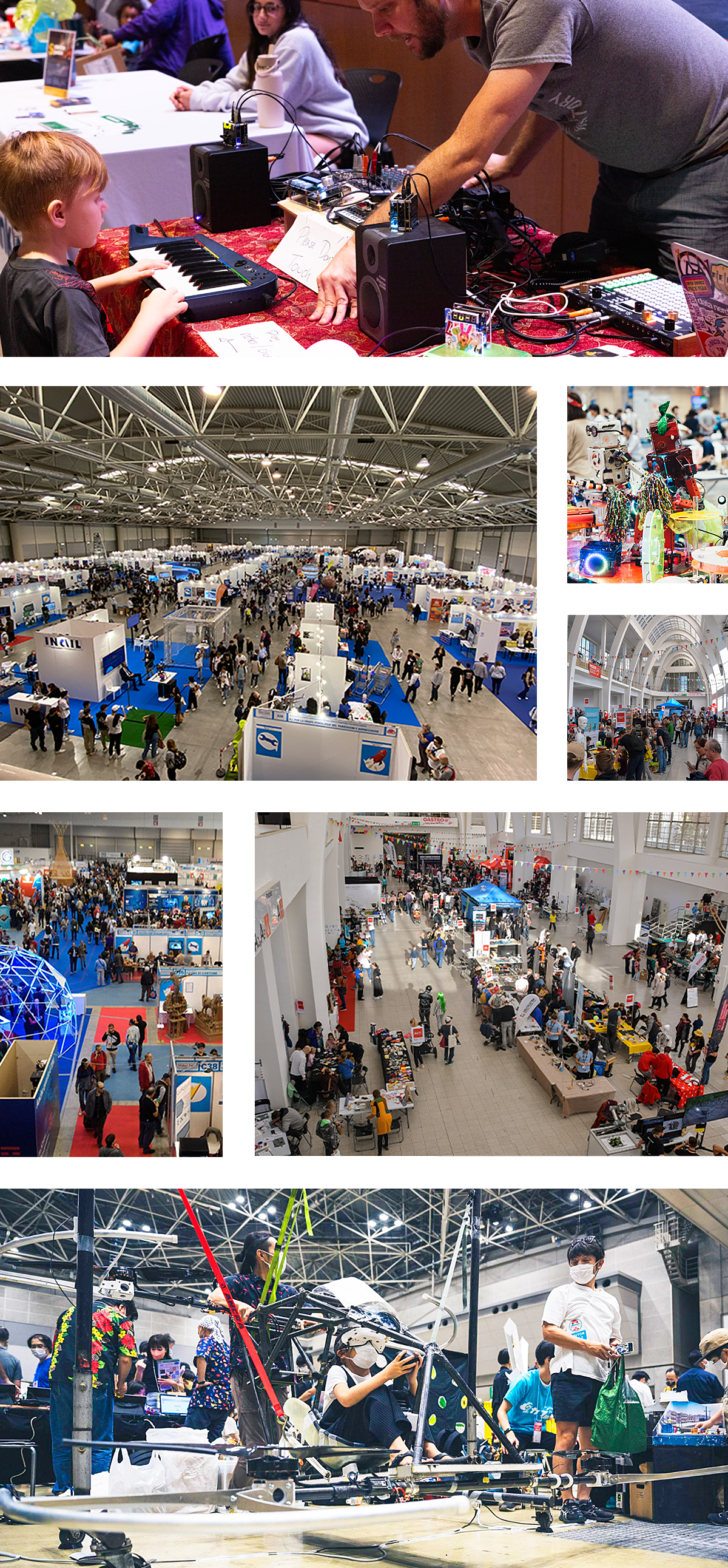
I reviewed several international editions, such as Maker Faire Rome, Tokyo, and San Francisco, analyzing how layout strategies, wayfinding systems, and graphic languages were implemented in different scales and architectural conditions.
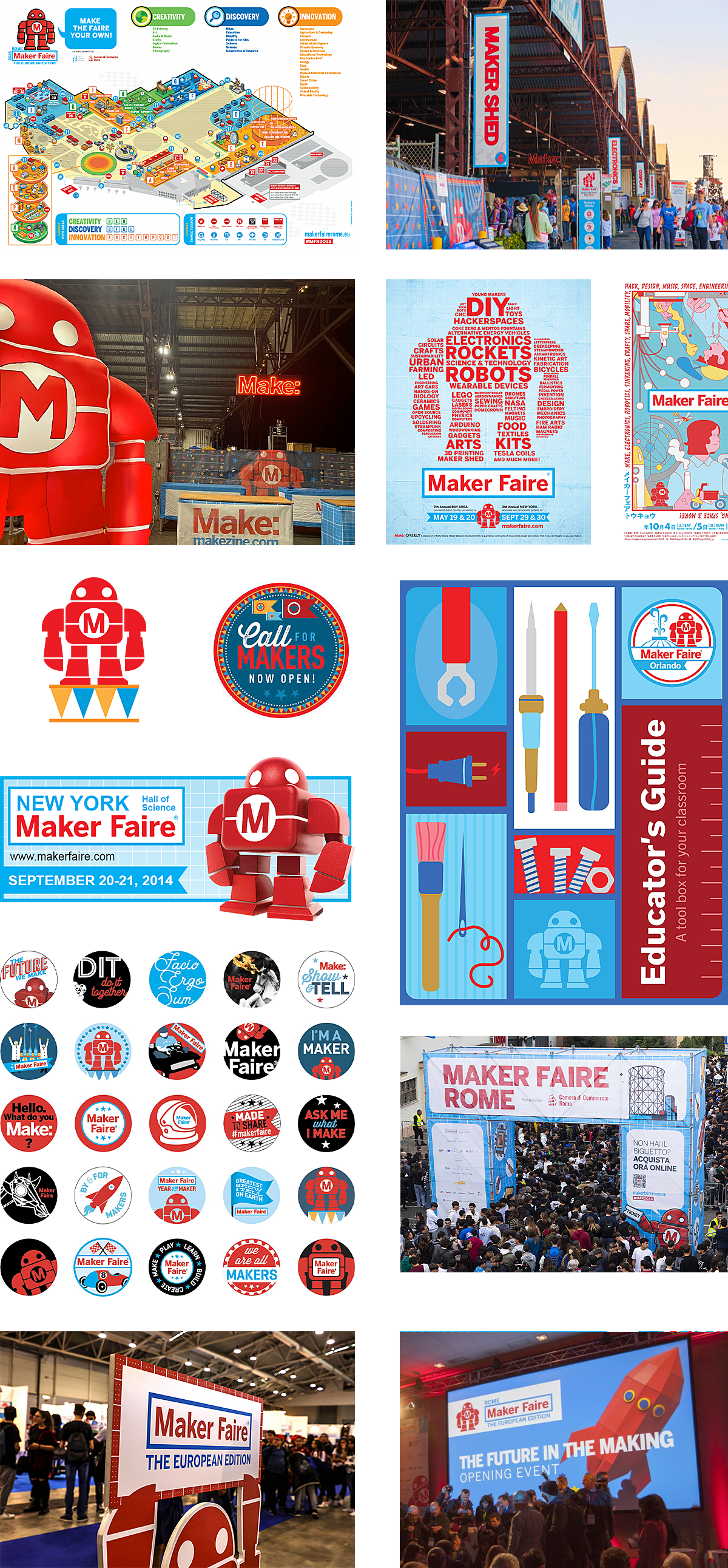
Key insights:
-
For this type of event, modular and scalable designs are preferred, allowing consistent application across diverse formats.
-
Although the Maker Faire global brand operates on a consistent foundation, it invites local organizers to reinterpret it, enabling unique cultural and contextual expressions that result in a living, evolving global brand organism.
-
Both venues offer a well-established and connected infrastructure, perfect for an event of these characteristics.
Development
Designing the Experience
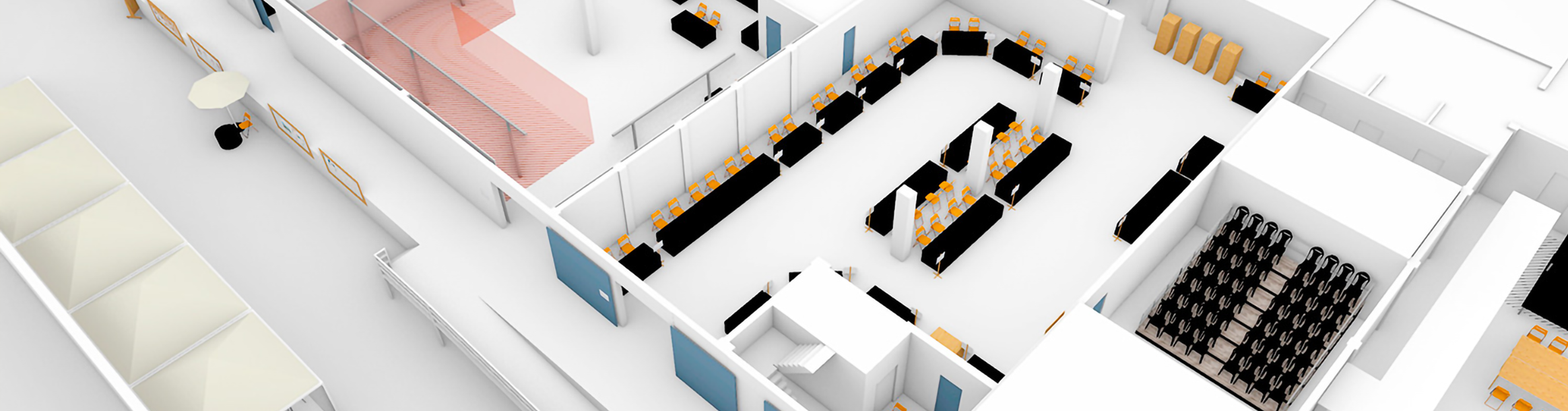
In this phase, I focused on translating insights from the discovery stage into a cohesive spatial and experiential strategy, defining how visitors and exhibitors interacted within the venue, ensuring that circulation, visibility, and engagement worked together.
-
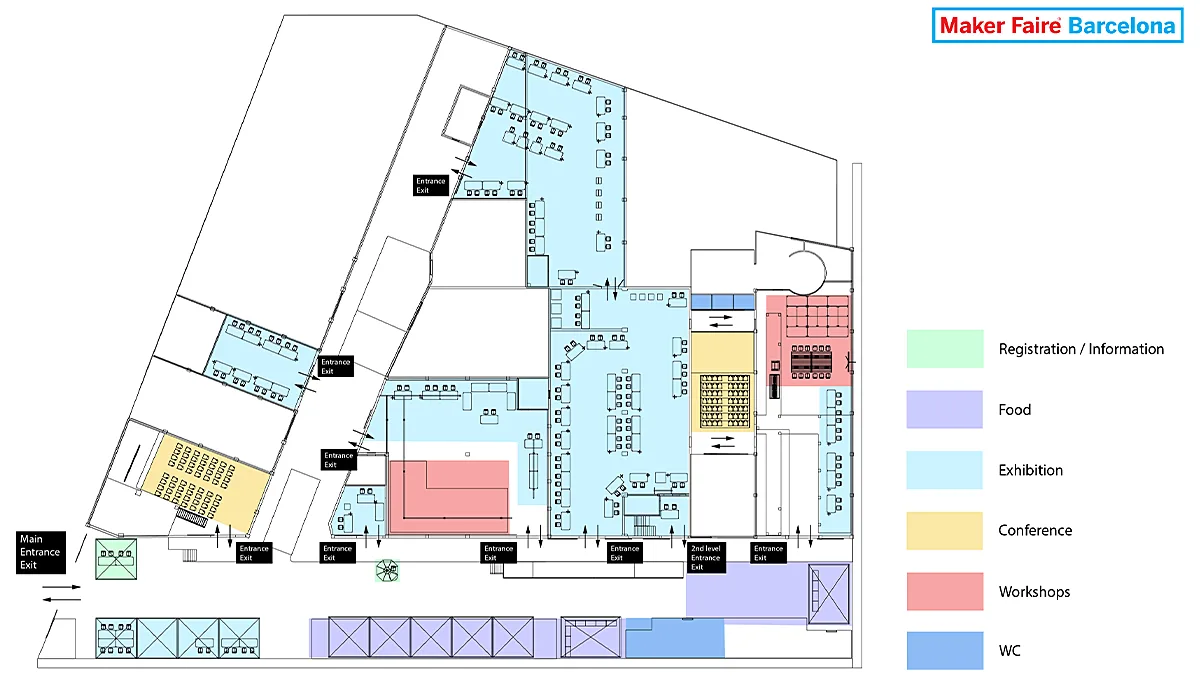
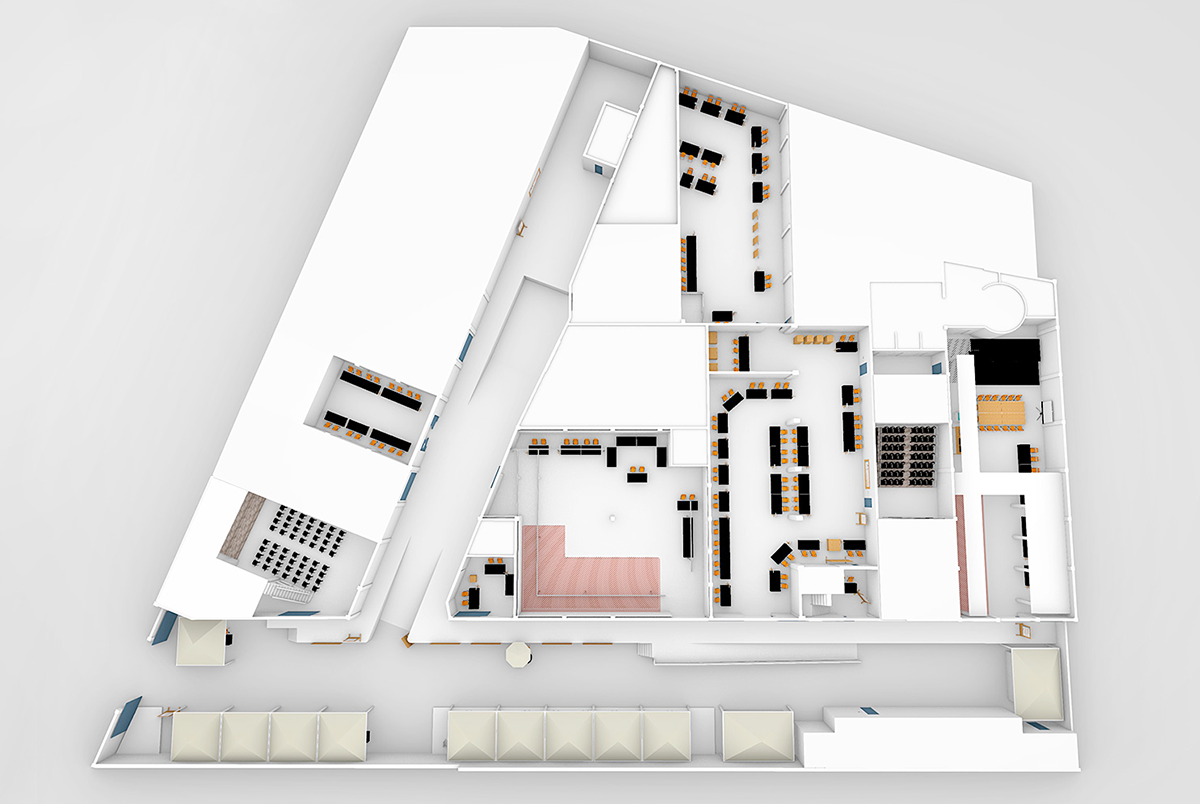
Spatial Design, Zoning, booth arrangement, circulation routes, rest and activity areas.
-
Visitor Journey, How people navigate and experience the space.
-
Zoning strategies, exhibitors, workshops, talks, and networking areas
-
Visitor flow, optimization and accessibility considerations.
Italian Pavilion – Fira Barcelona (2017-2018 editions), floor plan and 3D view.
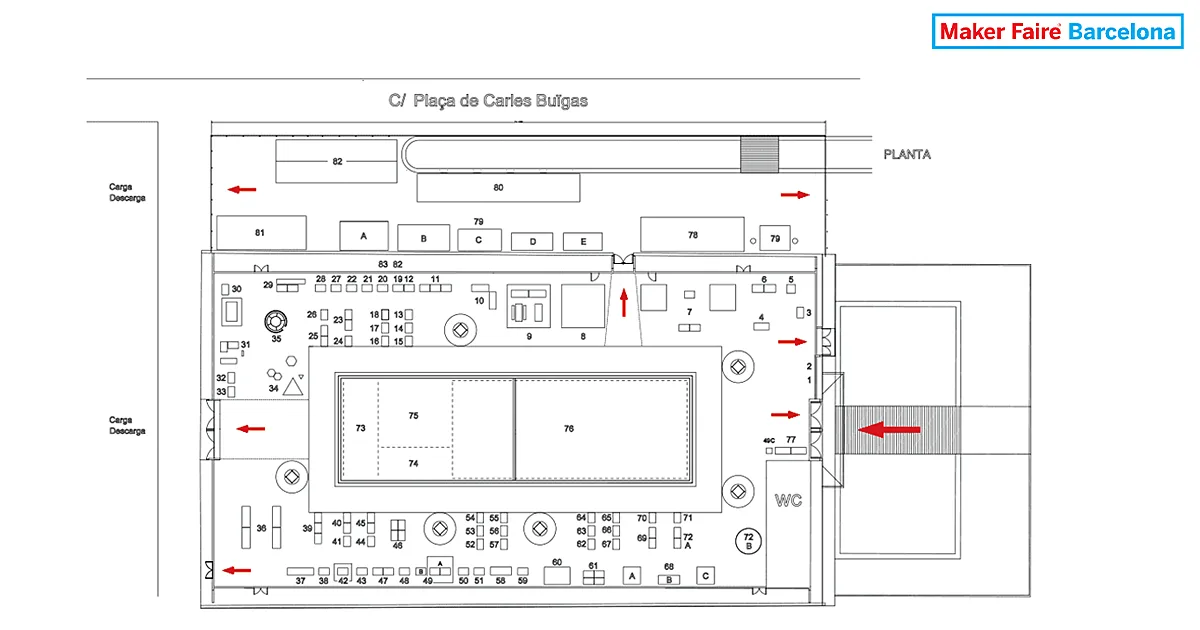
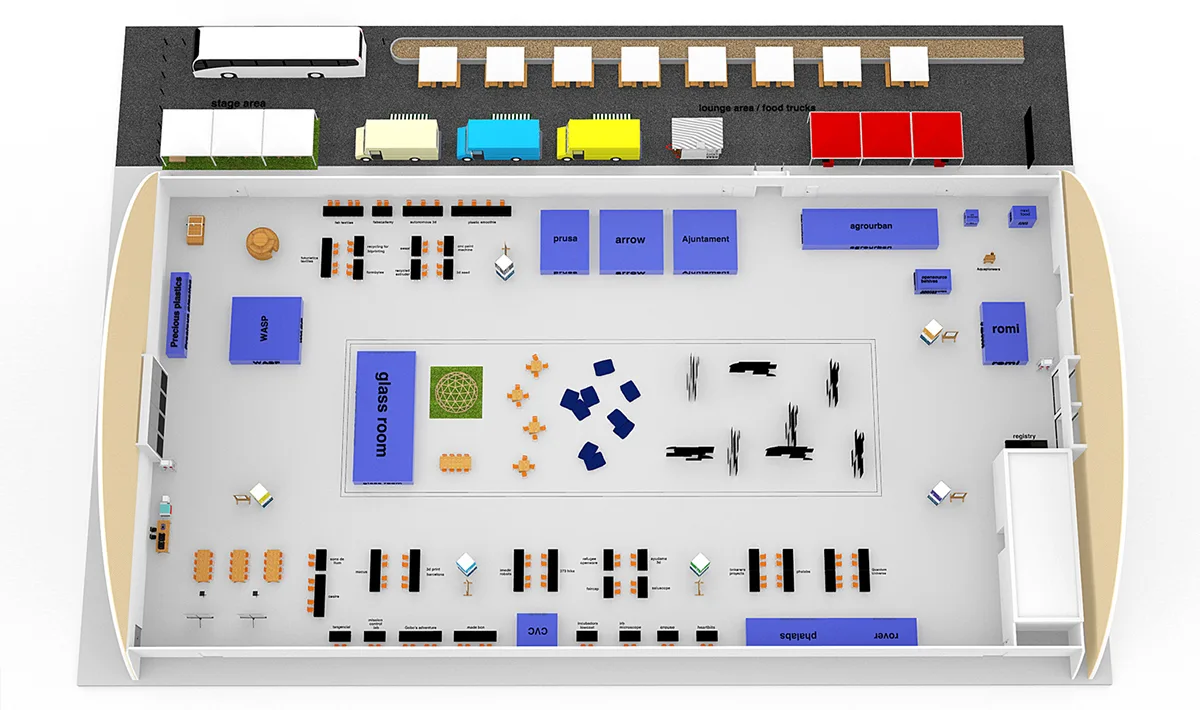
Nau Bostik – Barcelona (2019 edition), floor plan and 3D view.
Defining Visual Language
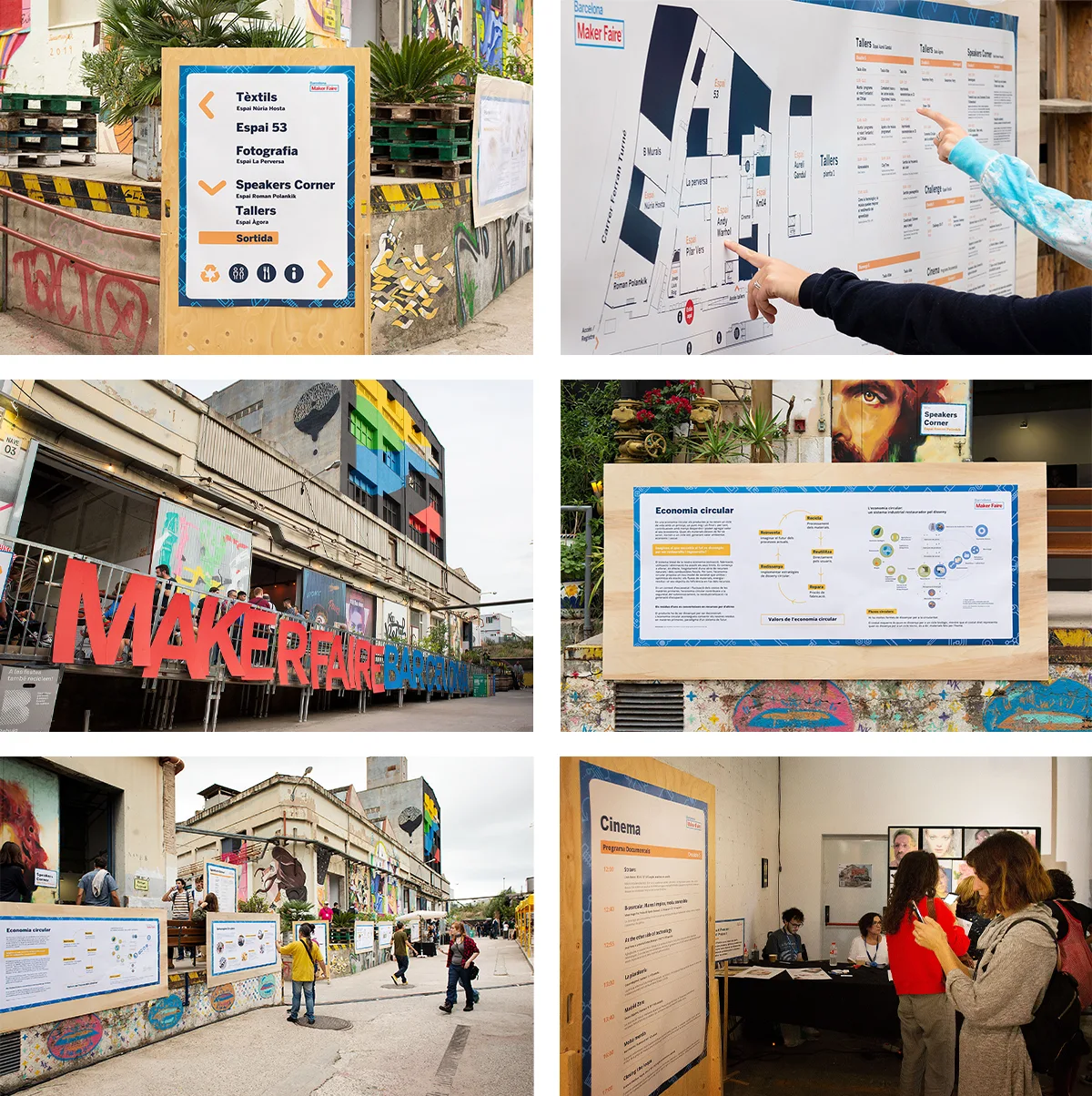
I covered all printed and digital materials, including maps, schedules, directional signage, and large-scale graphics and digital assets, ensuring clear navigation and a consistent, energetic atmosphere throughout the exhibition space and the event communications.
Italian Pavilion – Fira Barcelona (2017 edition)
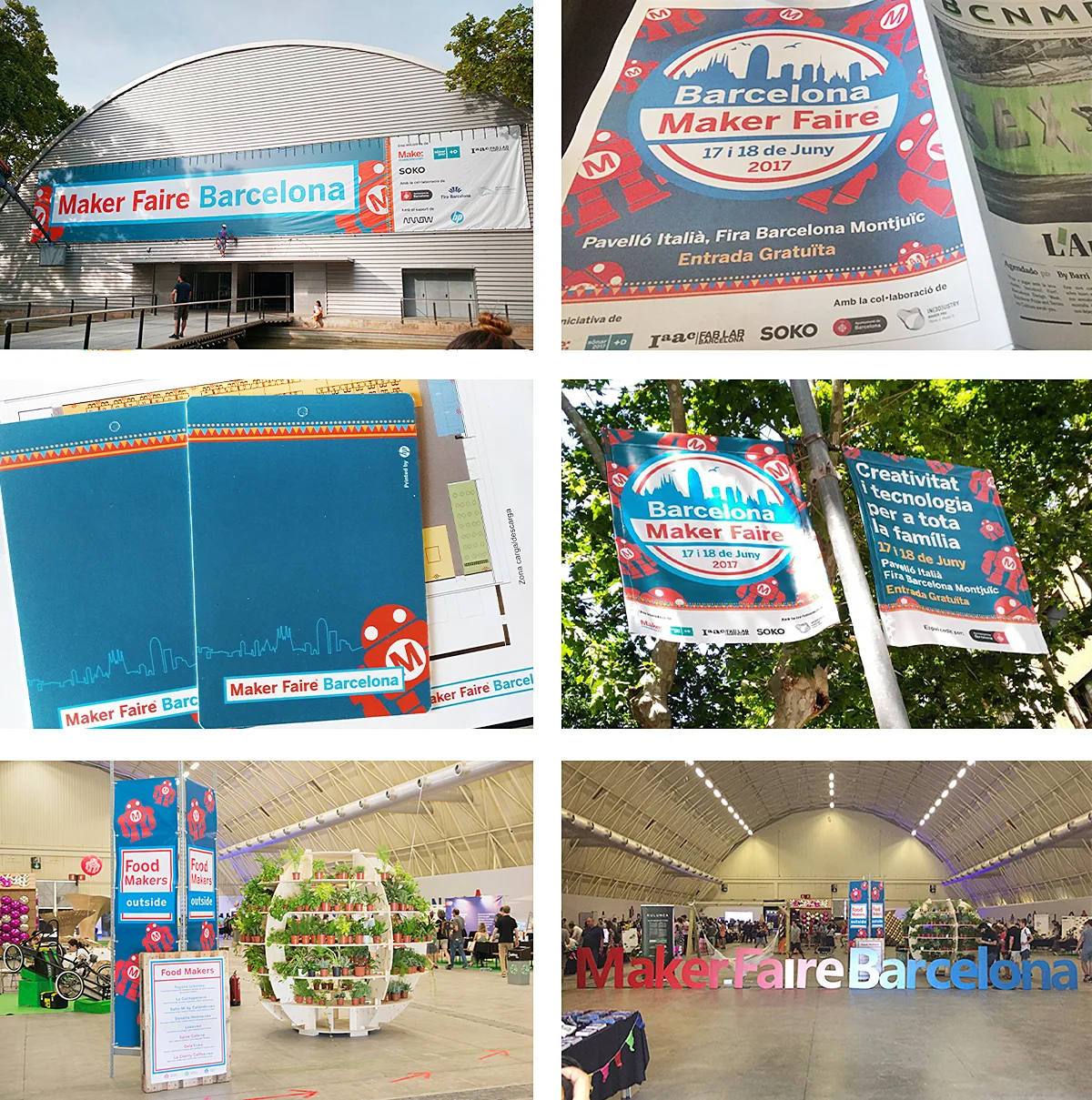
Italian Pavilion – Fira Barcelona (2018 edition)

Nau Bostik – Barcelona (2019 edition)
Implementation
From Concept to Reality
I supervised on-site to ensure that every element, from structures and signage to lighting and furniture, was aligned with the original design definition. During setup, the team adapted in real time to venue constraints and evolving exhibitor needs, maintaining visual coherence and functionality.
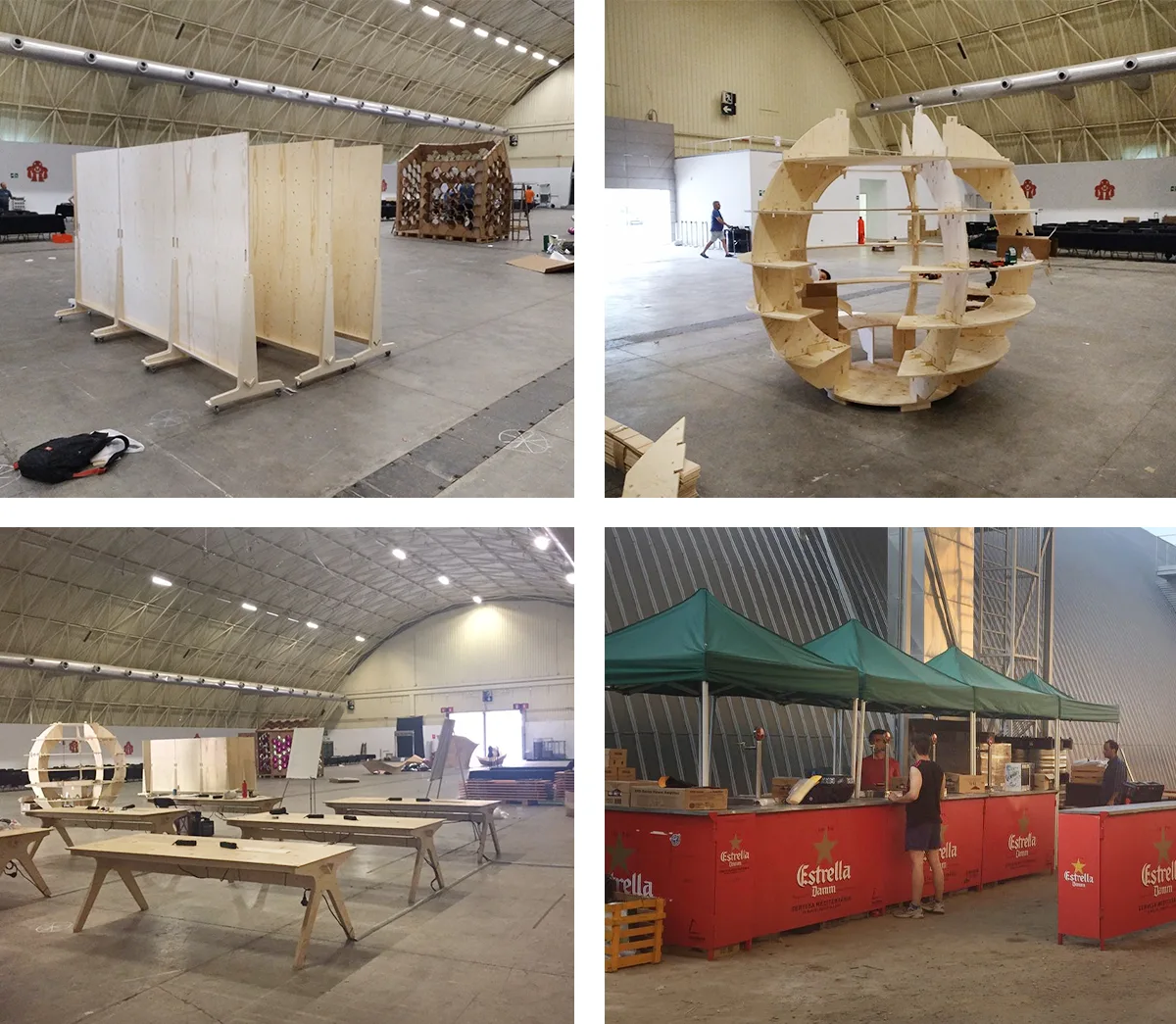
Italian Pavilion – Fira Barcelona (2017 edition)
The first Barcelona edition at the Italian Pavilion established the foundational spatial and visual language. The design focused on modular layouts, clear visitor flow, and adapting the Maker Faire identity to a large, open-plan venue.
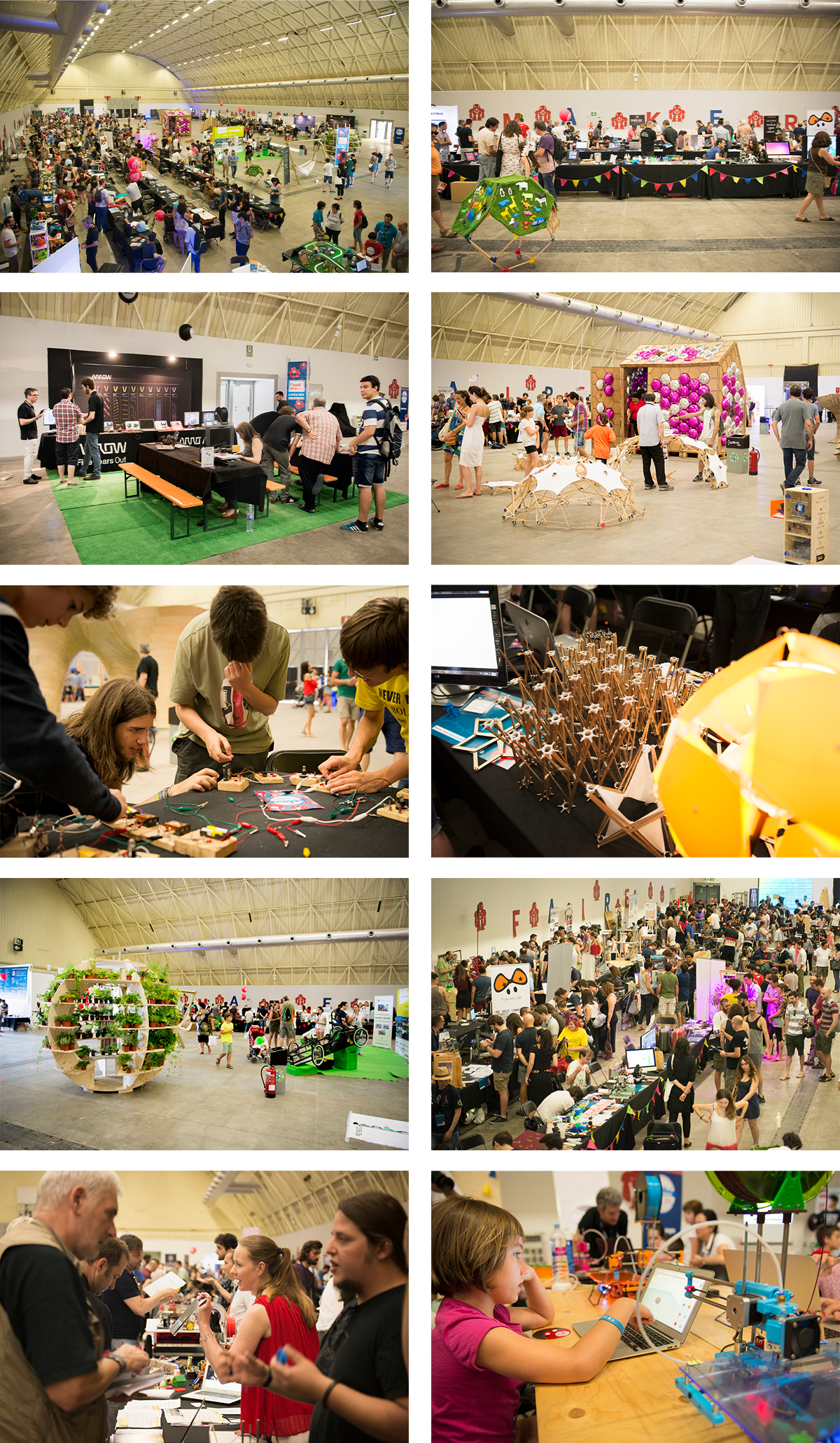
Italian Pavilion – Fira Barcelona (2018 edition)
We developed the second edition based on the learnings from the previous one and experimenting with the visual language. The focus was on optimizing visitor circulation and enhancing the cohesion between exhibitor areas, workshops, and activity zones.
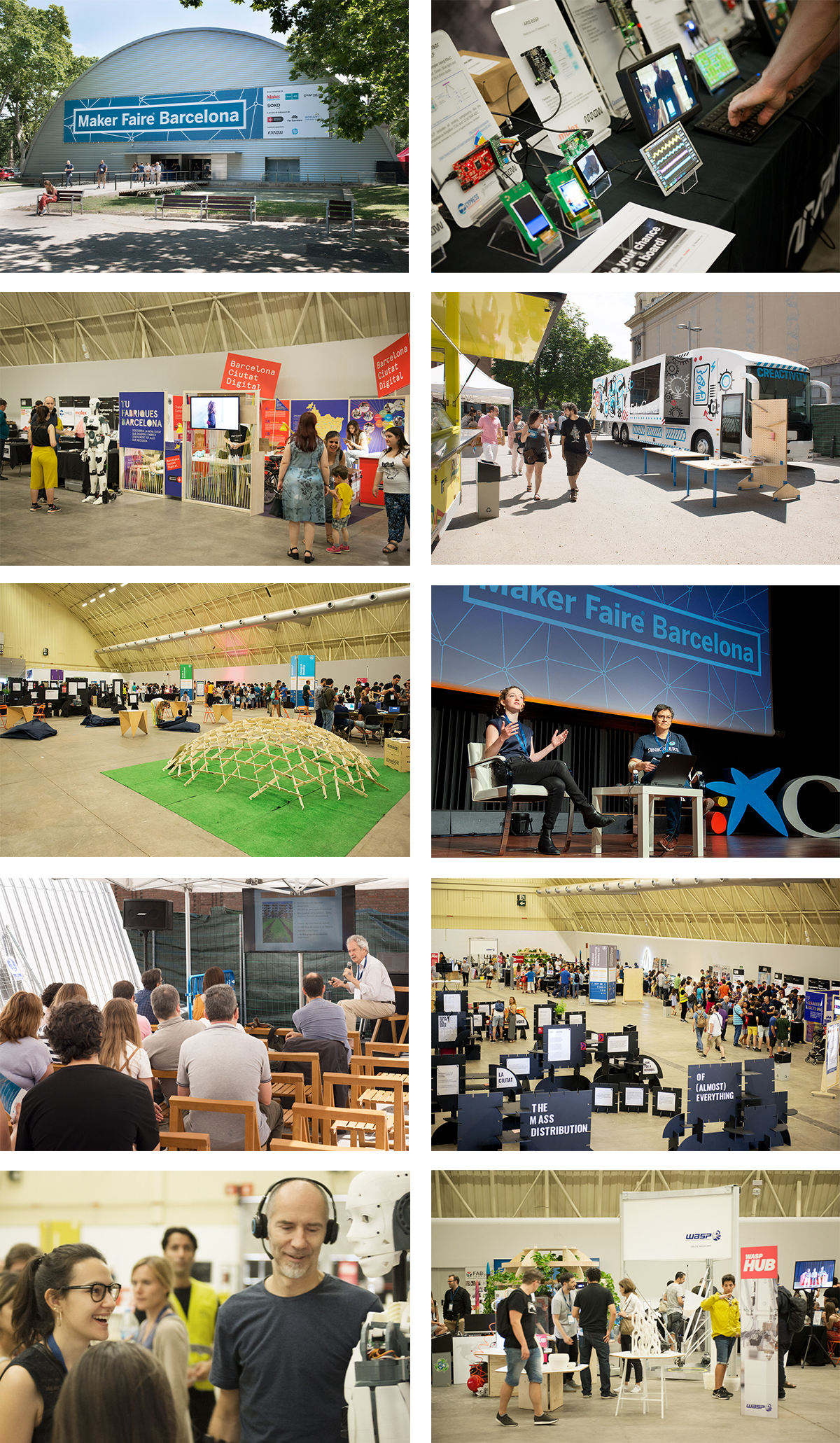
Nau Bostik – Barcelona (2019 edition)
In this edition, the fair moved to Nau Bostik, and we focused on adapting the previous system to a fragmented, industrial environment. We renewed the graphic language, modular structures, and maintained the identity continuity while embracing the venue’s raw, creative character.
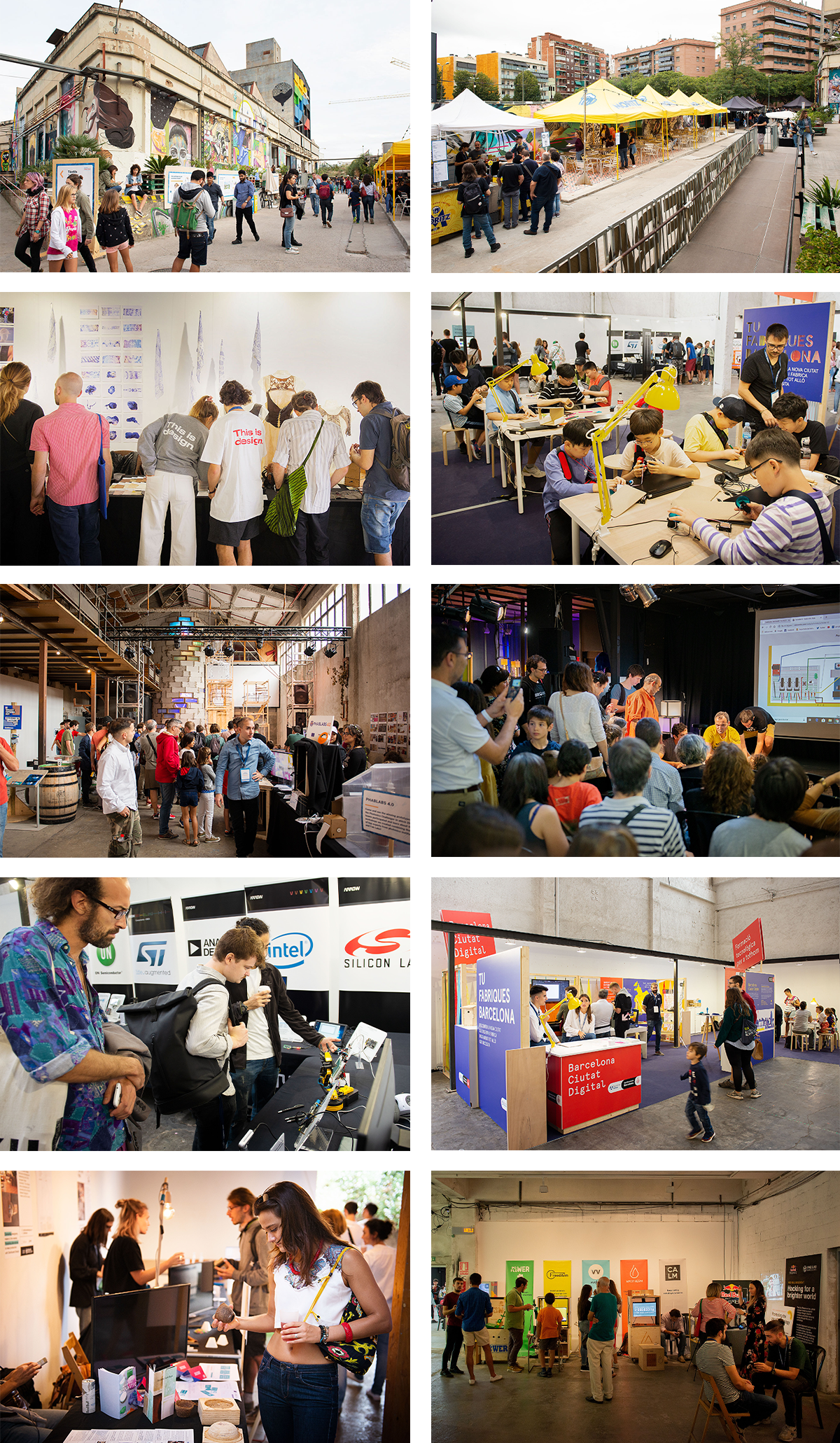
Evaluation
Design Conclusions:
-
The modular approach proved essential when adapting to different venues and scales and helped to reduce the setup time by 30% in the 2018/19 edition compared to the 2017 edition.
-
Each venue presented unique architectural and logistical challenges that informed the evolution of the design strategy.
-
By creating reusable assets, adaptable structures and furniture, and a consistent visual framework, the project established a scalable system that could grow and evolve with future editions, ensuring long-term design efficiency and sustainability.
Event Impact
-
Attendance scaled from approximately 1,000 to 10,000 visitors within five years, underlining the rapid growth and increased reach of the event. Ajuntament De Barcelona
-
The 2019 edition featured 150 projects and attracted 10,000 visitors. Barcelona Activa